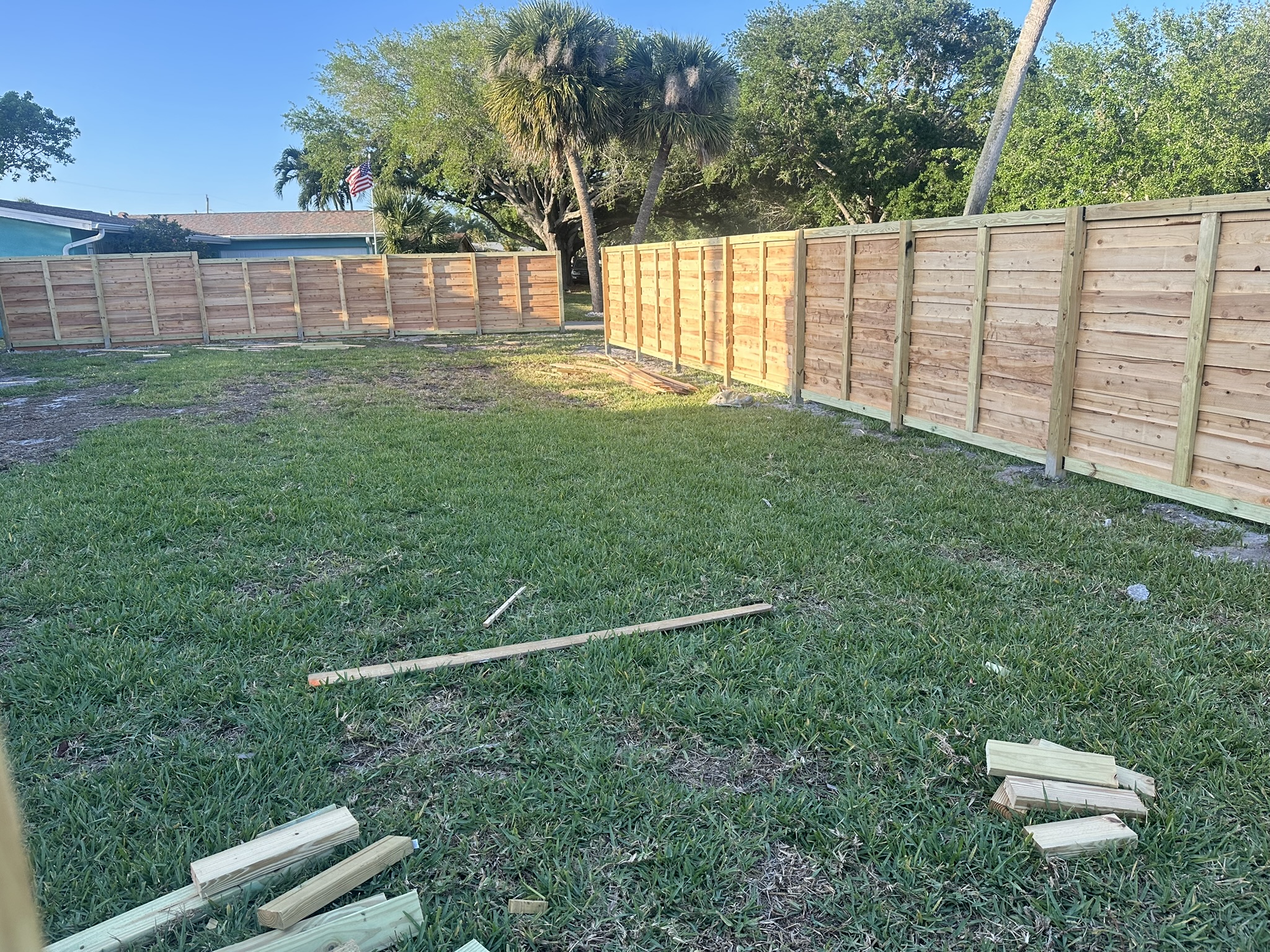
In March 2025 I drove down to Indian Harbour Beach, Florida to help my son Drew build a fence in his yard. I’d planned on a few extra days of downtime, but I didn’t get down there as early as I’d hoped, so the fence ate the whole trip. It turned out great, but it was hot, and on top of that I had a tooth that was going nuclear. Fortunately my daughter-in-law is a dentist, and she took care of it. Thanks, Cassandra.
We took exactly one day off and spent it at Disney World with the grandkids, which was worth every minute.

The Boat Next Door
On the last day, we were collecting a few compliments on the fence when Drew’s neighbor wandered over and introduced himself. It turned out he had a small center console sitting in his yard that he wanted gone. It had belonged to his brother, and it “needed a new engine.”
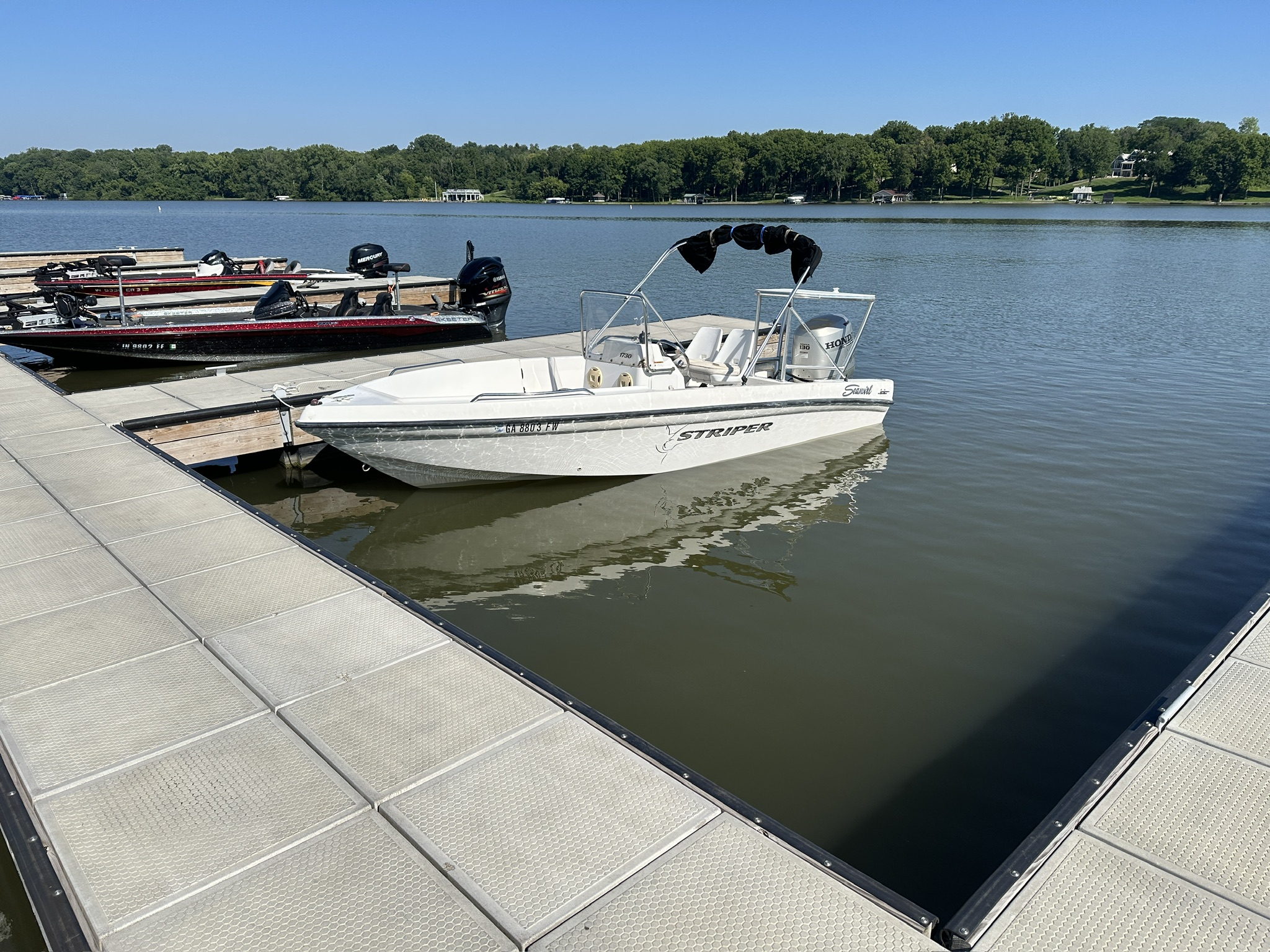
It was a 2003 SeaSwirl Striper 1730 center console, complete with trailer and a supposedly dead Honda BF130 fuel-injected outboard. The diagnosis: water in the oil. That’s exactly the kind of problem I fix all the time.
I checked whether the engine would turn over. Not only did the battery crank it, it actually fired for a second. My guess was a blown head gasket.
I didn’t really want the boat. But in the back of my mind, I wanted that engine. My pontoon runs a Honda BF50 that has been fantastic, but it’s underpowered and slow. A 130 would be perfect on it.
We settled on $3,400, which is basically the price of the boat without an engine. With about 45 minutes of preparation, I decided to tow it 1,100 miles back to Indiana. I pumped up the tires, made sure everything was tied down, and stopped at Tractor Supply on the way out of town for a spare wheel and tire and a grease gun for the wheel bearings. This was going to be either an adventure or a nightmare.
It towed home just fine. I think I stopped once to tie something down more securely.
First Attempt: The Head Gasket
Over the next few months I started in on the engine. The first thing I learned was that this wasn’t one of Honda’s finest designs. These engines had a corrosion flaw, and Honda ended up replacing the blocks on a lot of them. The replacement design fixed the problem, and as best I could tell, mine already had the updated version.
I had never worked on an outboard before, but they turned out to be pretty approachable. I got a service manual and replaced the head gasket. While I was at it, I polished the oxidized hull, and it cleaned up nicely.
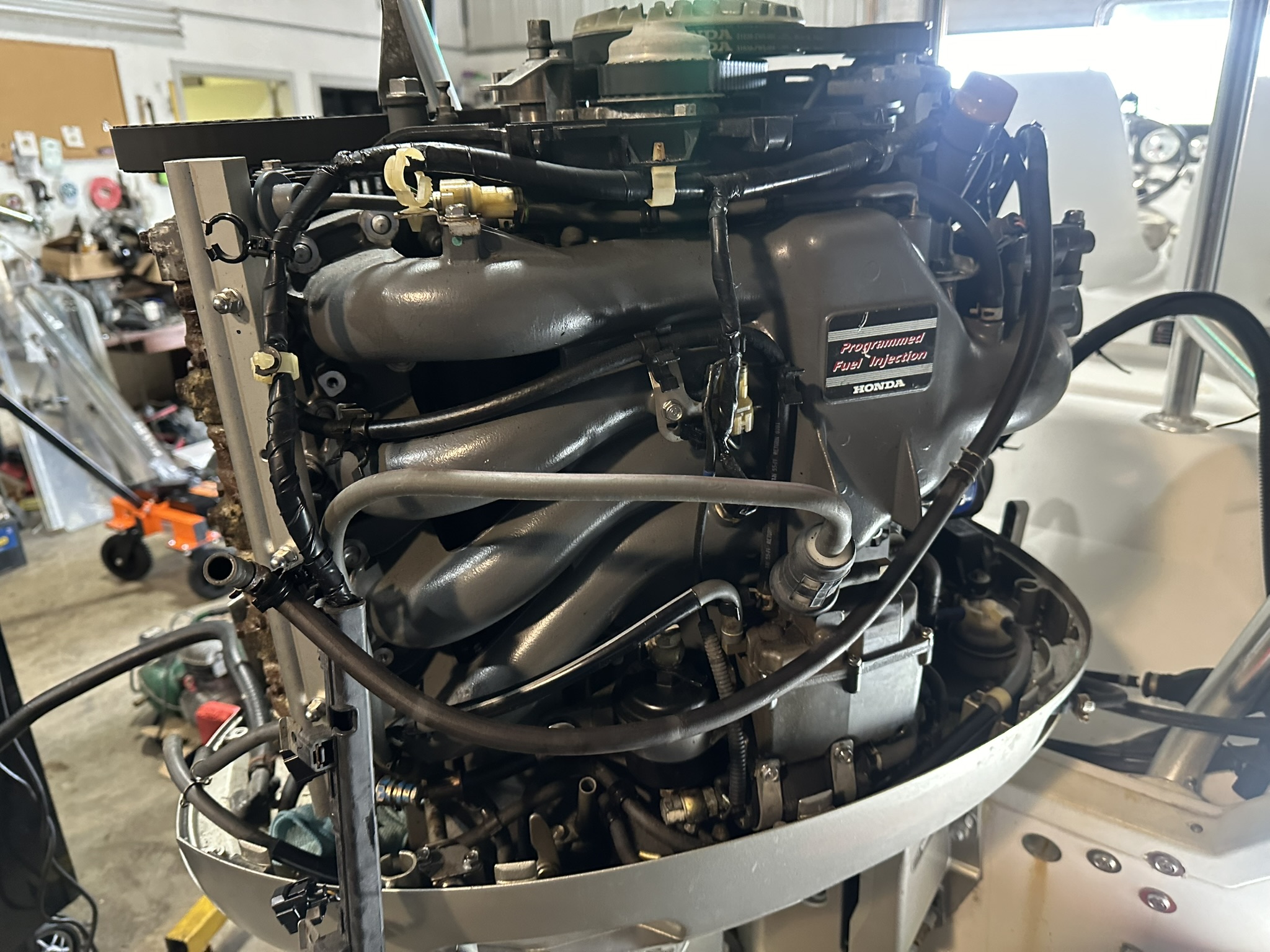
Then I started it up. Water in the oil. Same problem.
Finding the Real Problem
I tore it down again and found the actual culprit: a pinhole in the cylinder head.
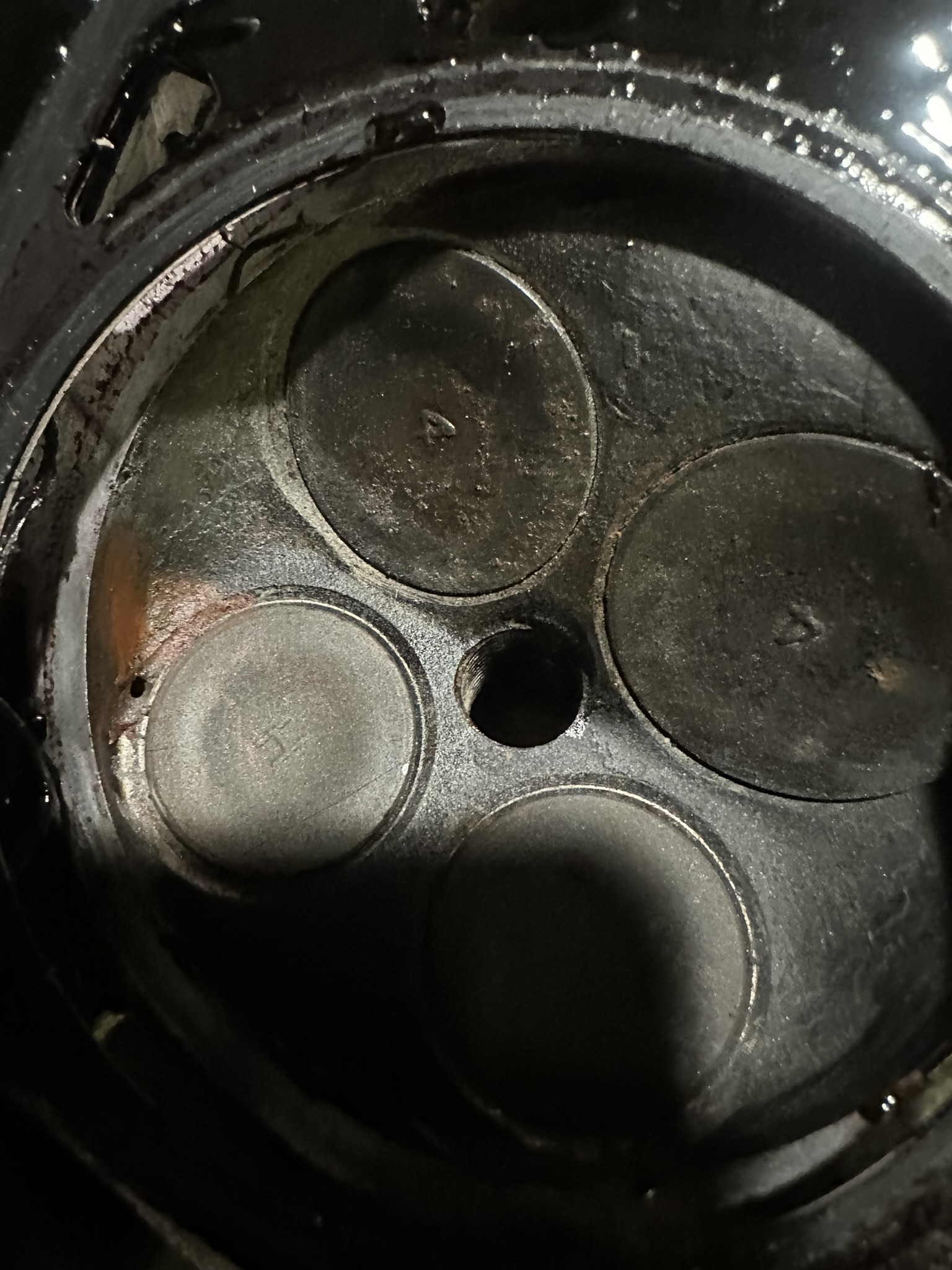
It’s frustrating, but in a lot of my fixes, I don’t get it right the first time. I once had to take a transmission apart four times before I got it right. But I do eventually get them fixed.
I hunted for a replacement cylinder head and couldn’t find one. What I did find was a complete replacement powerhead for $1,500. So much for the cheap fix. I bit the bullet and ordered it.
The Powerhead Swap
Through the spring of 2026, Brendan, the mechanic who helps me at the shop, and I installed the new powerhead. It turns out almost everything on the engine has to come apart to do it.
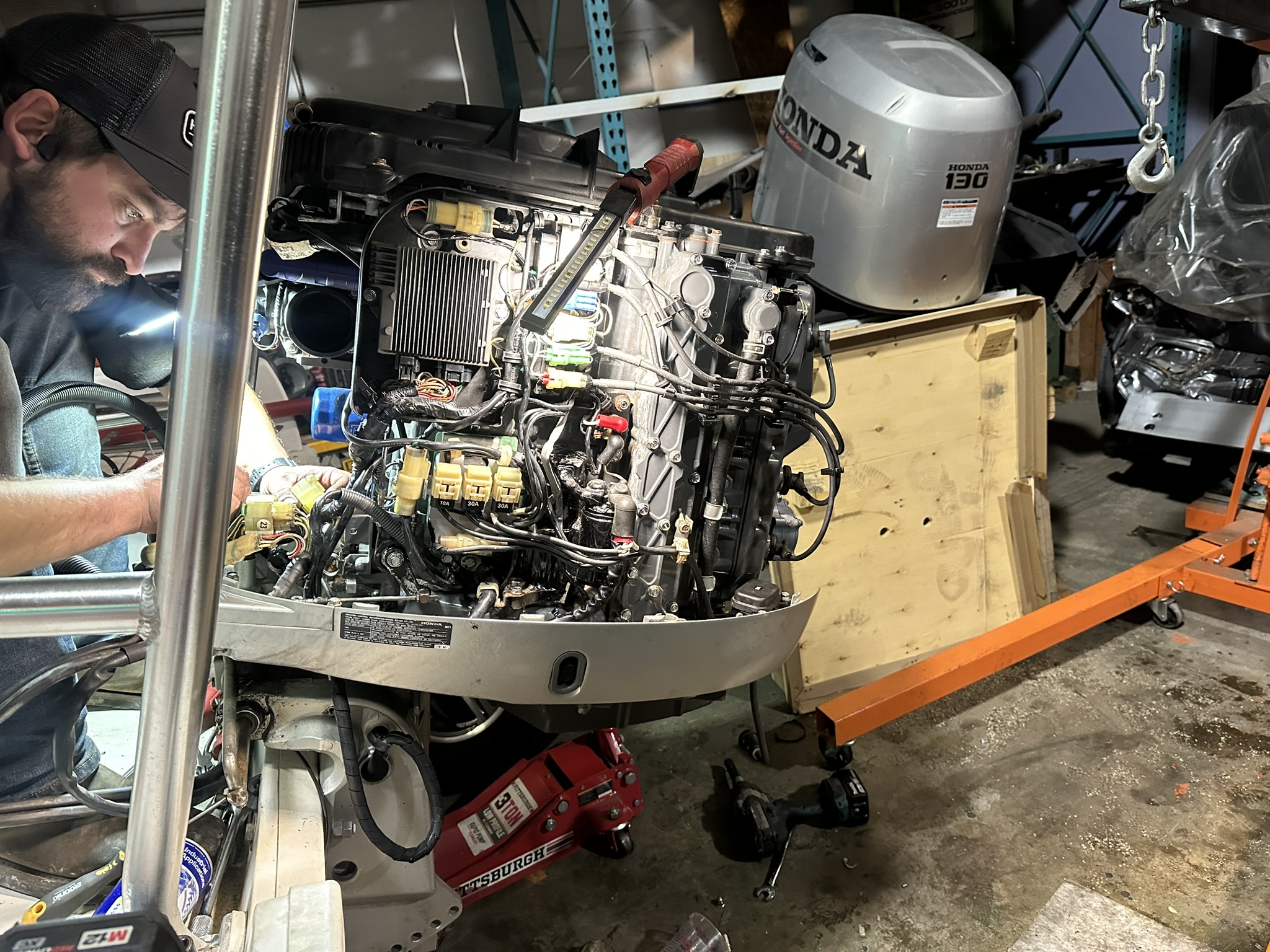
Once we buttoned it up, it started right away and ran perfectly on the stand. We sorted out a few electrical issues, and in July 2026 the boat finally went in the water.
Not only did it run perfectly, it’s a hot rod. Honestly, I think the 130 is too much engine for that little hull.
Now What?
I’ve spent this summer running it on Lake Monroe, since it fits in my condo garage down there. It’s a great boat for two people, and a nice little fishing boat.
That’s created a dilemma. The whole point was to put the 130 on my pontoon. But if I just swap engines, the 50 is probably too small for the SeaSwirl, and I’d like to take it back down to Florida and use it there.
So here’s what I’m leaning toward: put the 130 on the pontoon, sell the 50, and buy a new 90 hp Suzuki for the SeaSwirl. The SeaSwirl gets a new, even more reliable motor sized right for the hull, the pontoon finally has plenty of power, and somebody else gets a really nice 50 hp for their own project.
Either way, it’s another successful fix under our belt.