Photos of the trip:
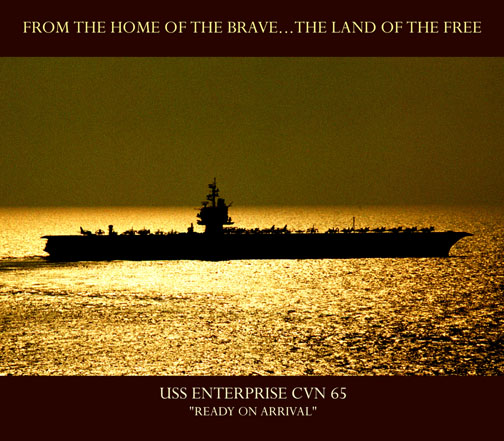
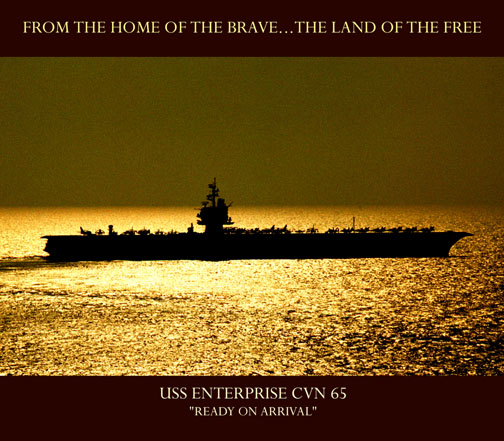
On September 25 and 26, 2000 I had the chance of a lifetime to spend a couple of days at sea aboard the USS Enterprise, CVN 65, one of the United States Navy’s nuclear powered aircraft carriers. The Enterprise was the first nuclear powered aircraft carrier, remains the largest ship in the Navy, and is the fastest ship in the world. I had dreamed about a trip like this since seeing the movie “Top Gun” for the first time in 1986 (which was filmed aboard - - The Enterprise). Well, let me tell you, the real thing doesn’t have Tom Cruise battling Russian Mig’s with his F-14, but it was just as exciting.
My trip began at Norfolk Naval Station in Virginia, where my Navy hosts put me up in overnight housing on Sunday night in anticipation of a scheduled 5 am flight out to Enterprise. On Monday morning, I learned that military operations are always subject to change, so our departure was delayed for several hours beyond the early morning.
At 11am, we were finally ready to go. The Navy gave us the first of several safety briefings before we boarded the Grumman C-2 which serves as the Carrier Onboard Delivery (COD) plane, the “pickup truck” of the Navy. I had heard many stories about COD flights, so I didn’t really know what to expect. As our flight time approached, the weather got bad, and rain began to fall. Before the flight out, we were given our life vests – pure military issue, with two inflation canisters, and an attached survival kit, and our “cranials”, a combination helmet, hearing protection and goggles, that made you look pretty silly.
The COD seemed to me like a pretty large plane to land on a ship. There were about nine rows of four seats that faced backward, a’la Southwest Airlines, and only a couple of small windows at the back of the plane. You buckled in with a lap and shoulder harness, and with all that protective gear, I started to get a little anxious.
The flight out to the ship was only about a half hour, and wasn’t too eventful. When we arrived in the area, they put us in a holding pattern. (figures) Landing on a carrier is sort of an understatement. In the final few seconds, our plane did a sharp diving left hand 180 degree turn, and sort of crashed on the deck of the ship. Before you knew it, you were stopped, and all of the sudden I could see many crewmembers on deck of the carrier all brightly dressed in different colors, directing us to the unloading zone. The large cargo door on the back of the plane opened, and the crew directed us to hop out of the plane and quickly follow them inside the ship.
When I hopped off the back of the plane, the chaos of the carrier deck became apparent immediately. It seemed like I had just jumped into a tornado. The COD engines were still running, and I first got hit with blast from the thirteen foot props of the C-2. Then I felt a 30 mile per hour blast of wind blowing across the deck of our ship as it steamed forward. Finally, within a few steps, I got a healthy blast of 300 degree exhaust from the back of a taxiing F-14 about 20 yards away. I had to step over fuel hoses, cables and tie down chains on the way toward the door to the island house. I was afraid I was going to get blown overboard in the first ten seconds!
When we got inside, everything calmed down immediately, and the noise of the deck could still be heard faintly in the background. We were received in the Captains Lounge – which contains many interesting photos and mementos of the Enterprise, arguably one of the most historic ships in the fleet. The ship’s commander met us, and gave us two instructions: “take pictures of anything you want, and talk to our people, they’re the ones who make this ship great”.
And so we spent the next 24 hours crawling all over the Enterprise, talking to the many sailors who make the great ship run. I learned so many things that I cannot possibly describe it all. The first thing I recognized was that the folks on deck that make the planes fly, are only a small part of the operation. Two-thirds of the more than five thousand crew members work below deck in such jobs as: cooking, cleaning, building bombs, moving supplies, treating illnesses and injuries, maintaining and repairing the ship and equipment, predicting the weather, planning combat operations, training and orienting the crew, maintaining morale, and so many other jobs. Each job is a necessary piece of the puzzle, and without each one of them, the ship would stop functioning. This pure teamwork and organization allows the carrier to stay out to sea for months at a time, and be ready to fight battles in all parts of the globe.
Out on the flight deck, we learned what all the various teams of individuals do to get the planes launched and recovered safely. The Yellow shirts handle the planes while on deck. The red shirts handle the bombs and weapons. The purple shirts, or “grapes” fuel the planes. The brown shirts maintain the individual airplanes, the white shirts are the safety crew – checking every activity and airplane in real time. And yes, there’s nothing quite like standing 30 feet away from an F-14 with engines screaming and afterburners lit, catapulting off the front of the carrier.
Recovering the planes is another incredible feat. The planes have large hooks on the tail and when landing hook one of four wires (actually heavy cables) that are stretched across the deck. The cable arrests the plane in about 200 feet to a dead stop. The pilot must drop the plane onto the moving carrier deck in precisely the right position and speed to hook the cables. He keeps the power on full throttle as he lands, so that he can take off and make another pass if he misses the wires. He is guided by a sophisticated set of electronics, visual aids, and air traffic control and every landing is recorded, reviewed and graded. A perfect landing catches the #3 wire, which requires landing a 50,000 pound airplane at 130 miles per hour onto the deck of a ship moving 26 miles per hour at sea within a three foot tolerance. During the entire two days, I never saw a plane catch any but the #3 wire.
While we were there, the crew was constantly training : In addition to the cyclical flight operations, onboard fires were simulated, a biological attack was simulated, requiring the entire crew to don gas masks for a couple of hours. A sea sparrow missile exercise was carried out. - - All carefully planned and flawlessly executed.
The other thing I learned was that life at sea is grueling. Most of the men and women (the crew is about 10% women) aboard the ship are married and have families. They leave home for weeks and months at a time. Email and infrequent phone calls are their only connection to home. They can’t go home when they get tired, sick or just want a change of pace. They can’t go home when their spouses or children are in need - they just have to wait until that deployment is over, and hope for the best.
Living and working on the ship itself is tough: Constantly walking on the steel decking wore my feet out in just a few hours. I went up and down so many ladders, I lost count of where I was most of the time. Even a straight walk down one of the corridors required constantly hopping through watertight passages, and dodging other crew members. Even on this big ship, the threat of seasickness and claustrophobia were there. I saw most of the crew members eat prodigious amounts of food at every meal, and I knew why – it takes tremendous energy to maintain your strength and focus even in relatively calm conditions. I can’t imagine what it is like during wartime conditions.
Needless to say, some of the folks get bored, tired of their jobs, and tired of the Navy sometimes. But to a person, they were very courteous to us, and answered every question we asked, no matter how small. Quite a number of folks simply loved their jobs and wouldn’t want to be anywhere else: A weapons systems chief gave us the most excited briefing on the various types of weapons on board and what each one did to the “bad guys”. An experienced pilot said that even though he could get out of the Navy and make three times the money, he knew he wouldn’t have half the fun. The air traffic control officer was so proud of his team, he couldn’t contain his excitement. One enlisted man had trouble communicating exactly what his job was – we never did figure it out, but you just knew that he thought the entire ship revolved around his activity. These people are what made the trip great, and I only hope that my consulting team gives the same level of enthusiastic response when describing their jobs.
When it came time to leave the Enterprise, the Captain came down and said goodbye, gave us some mementos, and thanked us for coming out to the ship – he thanked us. I had to think that as much as our military has been cut back, it sure seems to me that it is in good hands.
The catapult shot off the ship was as exciting as the landing had been. Zero to 128 miles per hour in three seconds - two or three times as fast as a Ferrari. You have to brace your legs against the seat back in front of you to avoid getting them broken.
All too soon it was over. I was very happy to have the opportunity to go on the trip, and want to thank my sponsor – Brian Persons of PEO Carriers office. I went back to my hotel room and slept for about fourteen hours to recover, but the memories will last quite a while.
Photos:
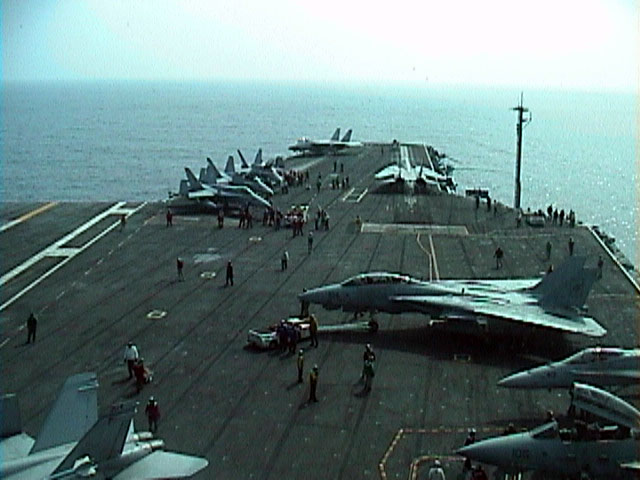
The busy forward flight deck of USS Enterprise 9-25-00
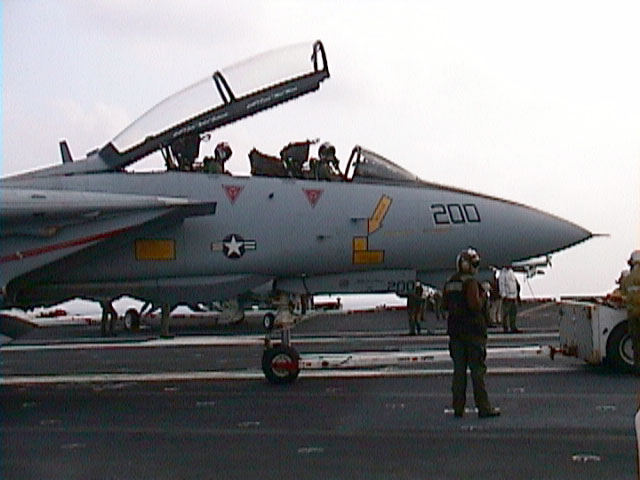
F-14 crew getting ready to go
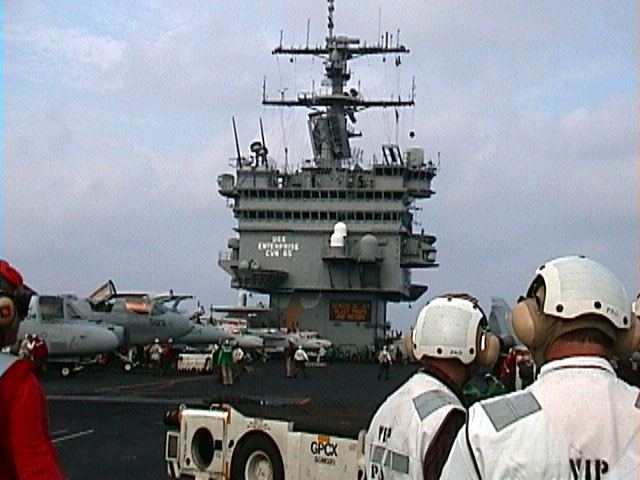
The Enterprise island
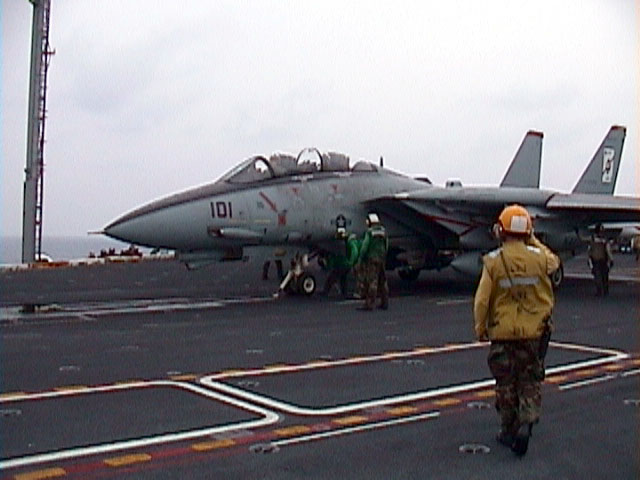
Hooking into the “Cat”
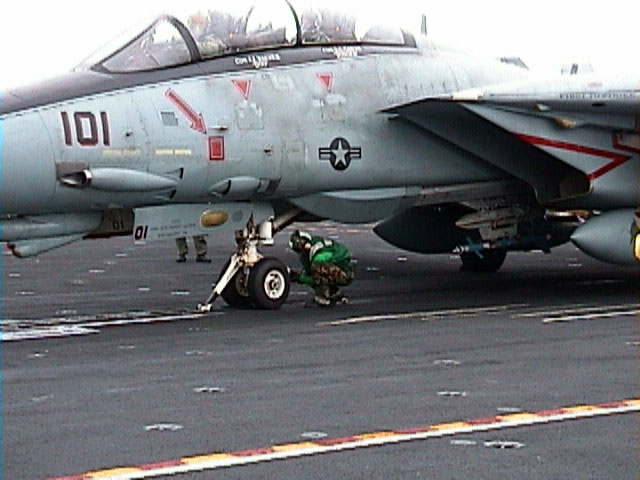
Those engines are running! This guy sets the equipment. Notice the missile under the plane.
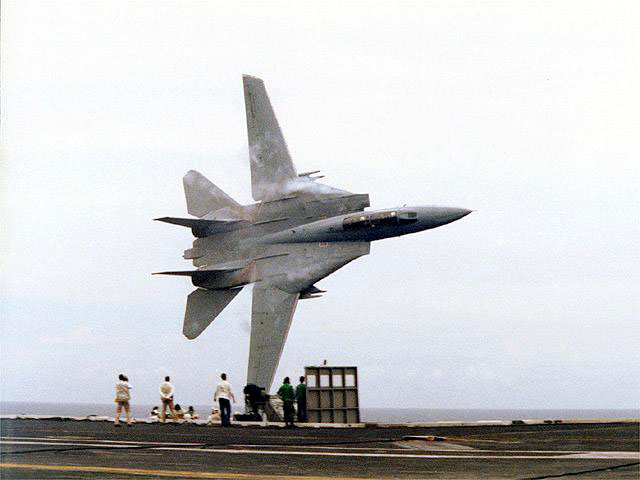
Now that’s a fly by!!! I didn’t see this on our visit, but it’s quite a sight, anyway.
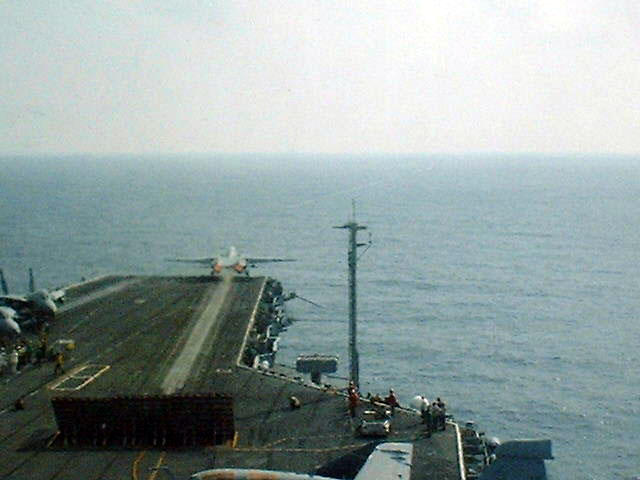
F-14 with burners on.
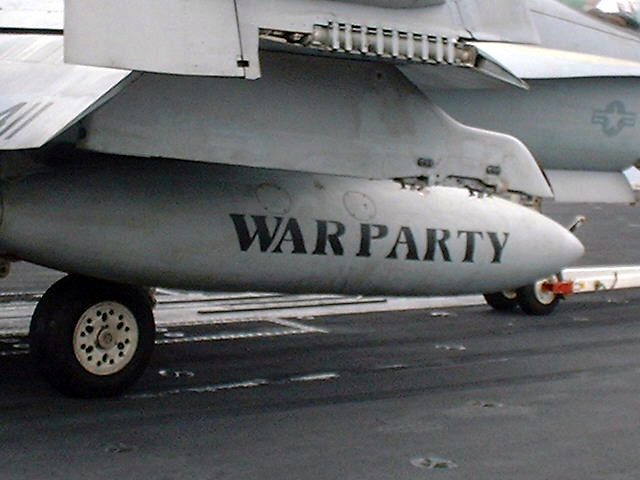
I’m sure it’s not a party for the bad guys!
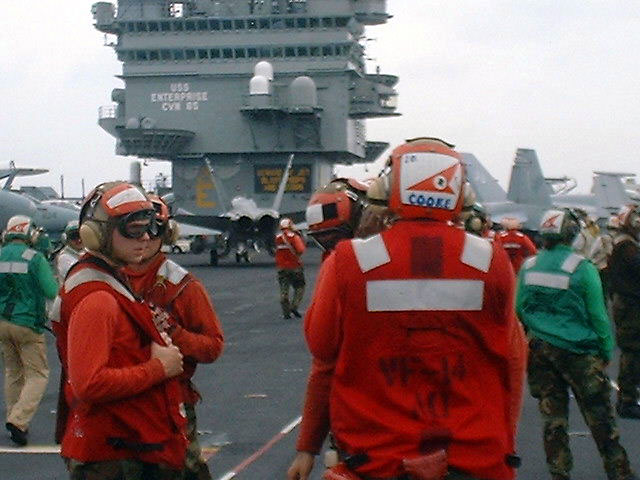
The deck crew wears different colors to identify their jobs - red handles missiles and bombs
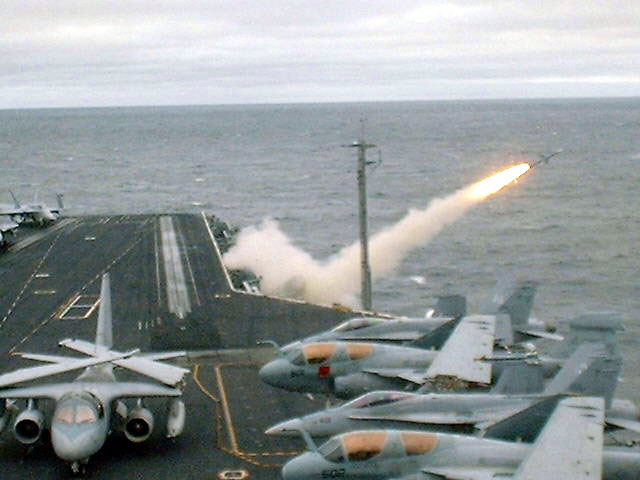
Live Sea Sparrow missile launch 9-26-00 - it took out the target!
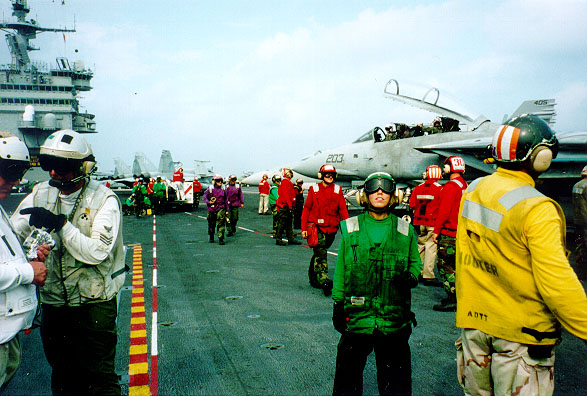
The flight deck is a colorful place
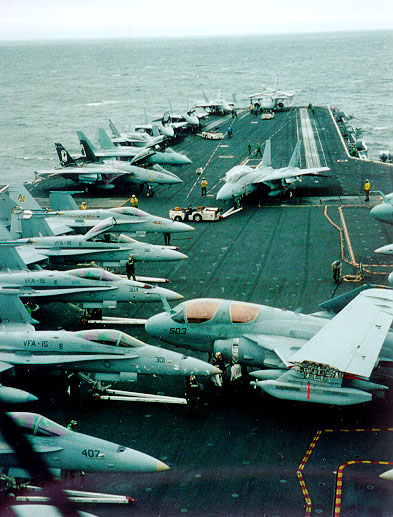
The flight deck can be really crowded
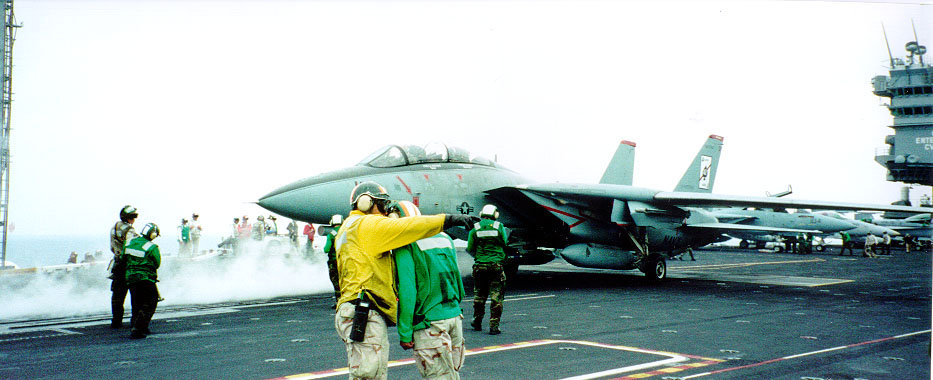
The steam can still be seen from the last launch, and they’re getting ready for another.
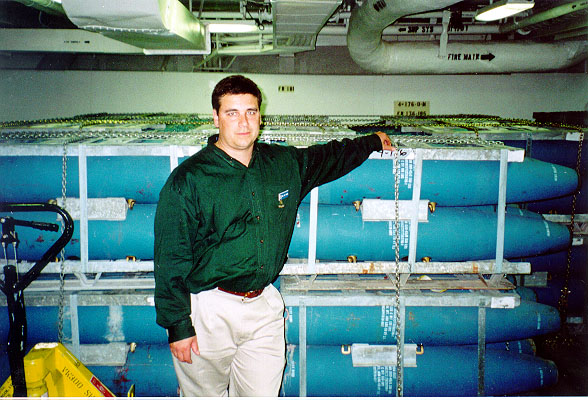
Yes, there are a few bombs on board. These are for practice.
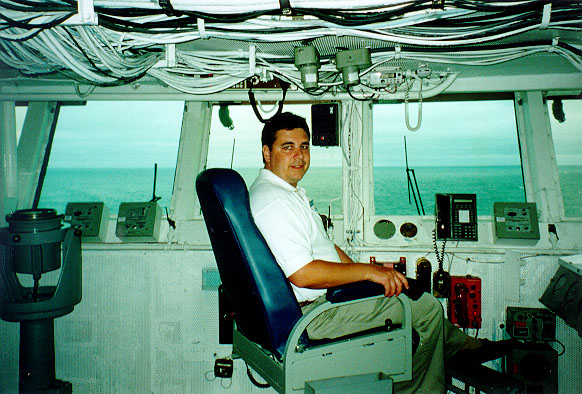
This is the Admiral’s chair. I’d love to know the history of the decisions made here.
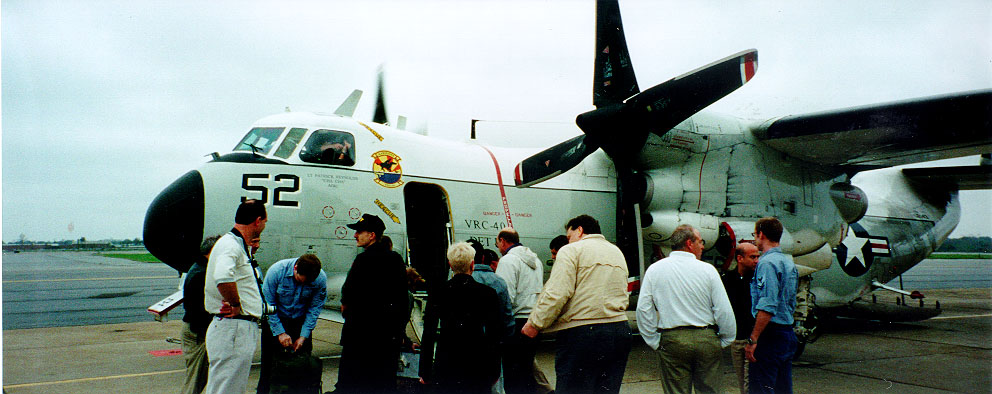
The C-2 Greyhound or Carrier onboard delivery plane. COD for short. This plane lands and takes off from the carrier with people and cargo onboard.